December has a way of feeling like a threshold.
The days slow down, but my mind doesn’t always follow. Calendars thin out. Emails quiet. I close one notebook only to open another. The year hasn’t ended yet, but it’s already asking to be accounted for — what moved, what stalled, what I’m carrying into the next season without meaning to.
There are too many open tabs, both on the screen and in my mind. I want rest and progress at the same time.
It’s the month where everything feels possible and overwhelming in equal measure.
I found myself restless in that familiar way — not lazy, not unmotivated, just crowded. So many ideas tugging at me. So many versions of myself whispering for attention. The writer. The planner. The woman becoming. The woman resting. The woman who wants to begin again before finishing what she already started.
It felt like pressure, but it wasn’t coming from one place. It was coming from everywhere at once.
It wasn’t that I lacked direction. It was that I hadn’t chosen one.
December doesn’t just carry the weight of endings — it carries the pressure of beginnings we haven’t chosen yet.
That’s when it clicked:
I wasn’t unfocused.
I was trying to live my whole life at once.
The Pressure to Have Everything Now
We live in a time where timelines are compressed beyond recognition.
We see finished products without witnessing the process. Overnight success stories without the years they required. Reinventions that look seamless, effortless, immediate. Every scroll delivers another version of “what’s possible,” stripped of context and paced for consumption.
It creates a quiet anxiety. The sense that if you don’t move quickly, you’ll fall behind. That if you don’t act now, you’ll miss your window. That choosing one thing means forfeiting everything else.
December intensifies this feeling. The year hasn’t ended, but the pressure to decide already has. To assess. To reset. To imagine who you should be by January — as if clarity is something you’re supposed to produce on demand.
In that atmosphere, urgency feels rational. Even responsible. And when urgency becomes the default, focus starts to feel restrictive instead of stabilizing. Choosing one path feels risky. Depth feels like delay.
But the exhaustion we’re carrying isn’t from doing too little.
It’s from trying to hold too much at the same time.
Capability Is Not Calling
One of the quiet traps of adulthood is realizing how capable you are.
You can do many things well. You can imagine multiple lives for yourself. You can see ten possible directions and picture yourself succeeding in all of them. And instead of feeling empowered, you feel split.
Because capability starts to masquerade as obligation.
Not everything you’re capable of is yours to carry right now.
Just because you can do something doesn’t mean it belongs to you right now. Not everything you’re good at needs your energy in this season, and not every option needs to be explored the moment it appears.
I had to practice deliberate non-choice. Letting certain ideas sit untouched, even though I knew I could execute them. Saying “not now” to things I genuinely wanted, not because they were wrong, but because they weren’t timely.
What saying “not now” protected was my depth. My energy. My ability to stay with something long enough for it to matter.
What Focus Actually Asks of Us
Focus is often framed as discipline — a kind of self-control that requires force. Pushing through resistance. Ignoring distraction. White-knuckling your way to completion.
But that hasn’t been my experience.
For me, focus feels like relief.
It’s the moment when the internal negotiation ends. When the constant background hum of “what about this?” finally quiets. When the body stops bracing for decision after decision and settles into direction.
Carrying “maybe” is heavier than we realize. Every open possibility takes up space. Every unresolved option taxes the nervous system. We think we’re keeping doors open, but we’re really holding ourselves in a state of low-grade vigilance.
Focus isn’t discipline.
It’s the body finally exhaling.
It’s containment that brings peace. Direction that brings relief.
How You Know What the One Thing Is
The one thing rarely arrives with fireworks.
It doesn’t always feel exciting or impressive. It’s not necessarily the thing that photographs well or earns immediate validation. Often, it’s the thing that keeps returning — quietly, persistently — even when you try to distract yourself with something shinier.
It’s the idea you circle back to.
The work that holds your attention longer than fear.
The commitment that doesn’t leave you alone.
For me right now, it’s writing. Not the ten other projects I could start. Not the distractions disguised as potential. Just this. The essays that won’t leave me alone.
I’ve noticed that what’s meant for me doesn’t demand urgency — it asks for presence.
And sometimes, the only honest answer is: I don’t know.
That isn’t avoidance. It’s listening.
It’s staying close enough to yourself to recognize when clarity is forming instead of forcing it before it’s ready.
The one thing isn’t always obvious.
But it’s patient.
And it waits for you to be, too.
Staying When Reinvention Calls
There’s a point — usually somewhere in the middle — where staying becomes uncomfortable.
The excitement wears off. The doubts surface. The urge to pivot gets loud. Reinvention starts to look tempting, not because the new thing is better, but because it offers relief from boredom, uncertainty, or the vulnerability of being seen mid-process.
There’s a kind of restlessness many of us carry — sometimes from survival, sometimes from inheritance — that we’ve learned to call productivity.
Mine started early. I grew up in homes where the address changed before I could settle into them — new schools, unfamiliar routines, learning before I had language for it that nothing stayed long enough to trust. I carried that forward. Every new chapter began with real intention, but the moment staying became uncomfortable, leaving felt easier. At a body level, staying felt dangerous. Reinvention wasn’t a personality trait — it was a reflex.
We’ve been taught that we should always be doing something, proving something, moving toward something. And when we slow down long enough to focus, it can feel like we’re not doing enough.
That restlessness makes reinvention feel productive. Necessary, even.
But constant starting is a way of avoiding the deeper work.
Completion changes you more than starting ever will.
Staying teaches you who you are when momentum slows. It builds a kind of trust that novelty never can. Completion changes you in quiet, lasting ways — not just because something gets finished, but because you stayed.
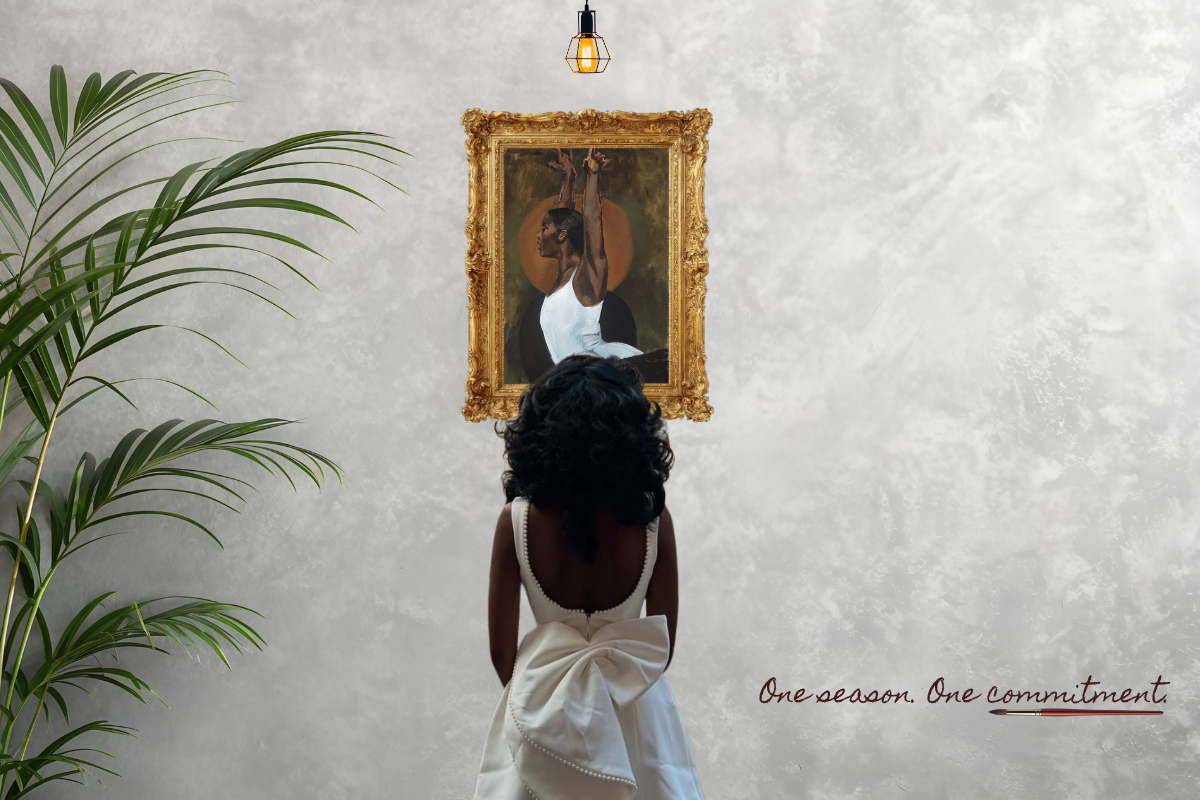
One Season, One Commitment
Focus doesn’t mean narrowing your life forever.
It means sequencing. Letting go of what doesn’t belong to this moment so you can stay with what does. That clearing matters just as much as the choosing.
It means understanding that “not now” isn’t the same as “never.” That other dreams aren’t being abandoned — they’re being asked to wait their turn. That choosing one thing for this season is an act of care, not limitation.
You don’t need a new plan.
You don’t need to become someone else.
You don’t need to hold everything at once.
You need one clear commitment.
Do the thing.
The one thing.
Everything else can wait.